
Don’t All Cows Eat Grass?
So what’s the deal with grass-finished beef? Don’t all cows eat grass? Why would I pay more for this beef? I’ve heard grass-finished beef tastes weird and is tough!
Maybe you’ve had one of these questions or another, so I’ll try my best to give some answers. First of all, was does “finished” even mean?
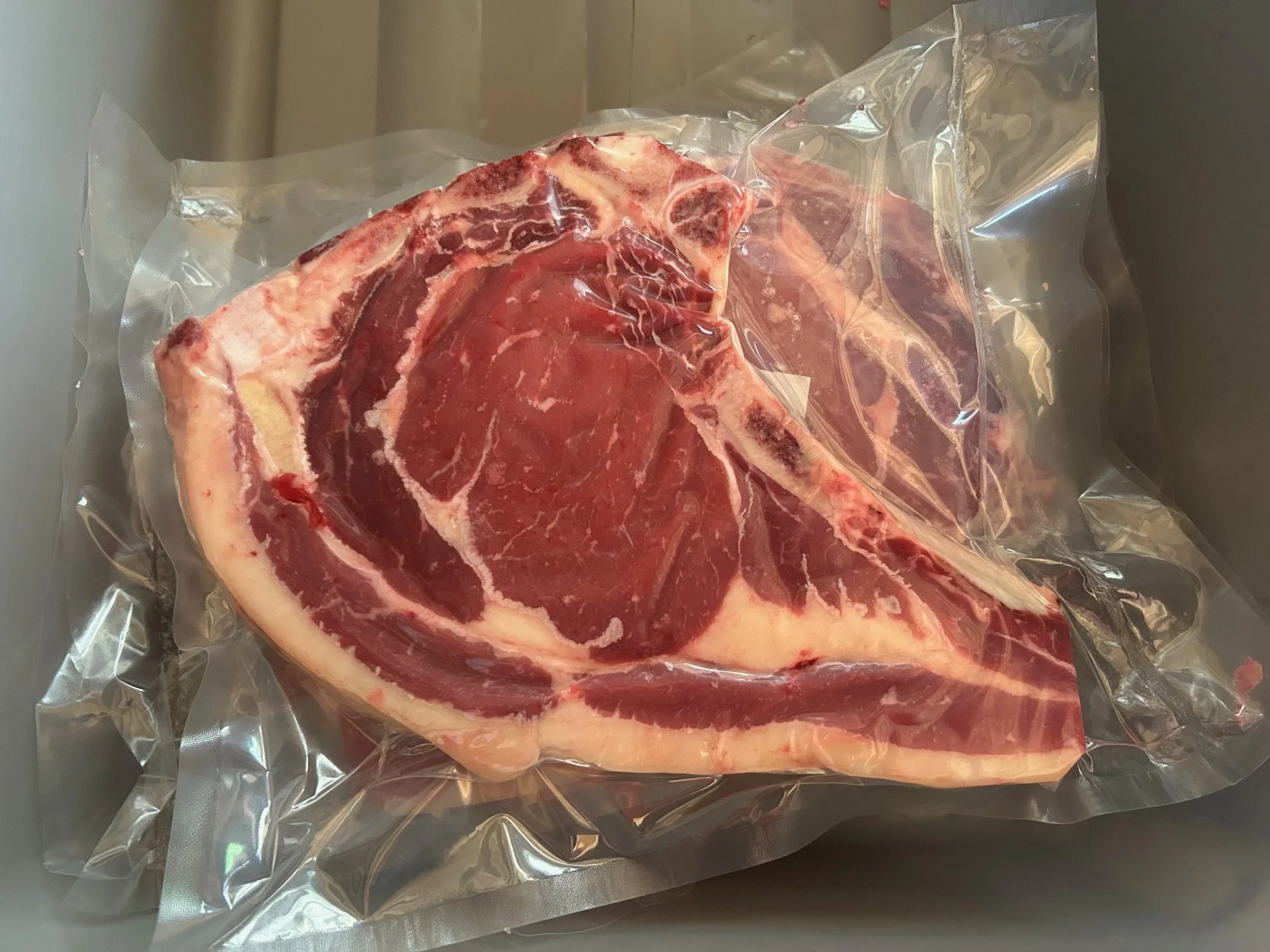
Finishing a beef animal is basically putting on extra fat. If you’ve looked at a steak and seen the white around the outside and streaks of white throughout the meat, that is fat. A steak with the right amount of fat will be flavorful and tender. An animal is finished when they have some extra rolls around the tailhead and their chest is filled out. However, just like with people this can get out of hand and you could have an animal that is extremely overweight and unhealthy. There is a fine line.
Conventional beef is raised for a year or so on pasture, but then the animal is put into a feed lot where it consumes a mix of grains that fatten it up quickly so it can be off to the slaughterhouse in as short a time as possible. This is somewhere between 16-20 months of age. As you can imagine this does not make for a very healthy animal. Imagine a person sitting on their couch all day, every day, eating nothing but chips and ice cream and getting zero exercise. It wouldn’t take long for that person to become overweight and sick. In fact, most of these animals would not be able to survive much longer than their processing date due to the diet that they consume.
Grass-finished beef, on the other hand, is never fed any grain. They are raised on pasture for their entire lives, eating fresh grass and legumes, getting plenty of exercise and moving freely. Typically in the winter, some hay is fed while the pastures go dormant. A grass-finished animal may take up to 3 years to get to an ideal finishing size. Here at Nurtured Lands Farm we move our cows nearly every day to fresh pasture and even when we do feed hay, it is done out in the field and never in confinement.
But grass-finishing a cow isn’t just a way to give them a better life; it actually produces healthier meat. Cows, along with sheep and goats, are ruminant animals. This means they can take complex carbohydrates, break them down with the help of millions of microbes, and turn them into a usable energy source. So, they are basically taking the energy stored in the pasture and converting it into a product that we can consume. In doing so, they also create a fat profile that is much healthier than the animals that are fed grain. Grass-finished beef regularly shows lower totals of saturated-fatty acids and also greater amounts of omega-3 fatty acids which are typically found in fish. Grass finished beef is also found to have higher levels of vitamins like beta-carotene and vitamin E, probably due to fresh grasses being higher in vitamins.
Another benefit of grass-finished beef from Nurtured Lands Farm is that we do not use hormones or systemic antibiotics. Typically, animals in a feed lot are given hormones and antibiotics to increase their feed conversion rates and protect them from diseases that arise from having animals in confinement. The whole point of feeding animals grain is to get them as fat as possible, as fast as possible. So, in order to keep the animals growing and not getting sick from their all-grain diet, they are given slow releasing hormones and feed with antibiotics in it. Again, this is a system that makes unhealthy animals so they must be propped up with drugs.
So why would Grass-Finished beef taste different or be tough? First, the flavor obviously comes from the diet they consume. A grain fed steak will taste the same in summer as in the winter and whether the animal comes from Kentucky or Colorado. That’s because they are all fed the same grain ration. A grass-finished animal may vary on their diet from season to season and region to region. But if the farmer is committed to having healthy pastures and not overgrazing, the flavor profile should be a good one.
As for the tenderness of the steak, I think this came from people trying to process animals that were not finished when grass-finishing became popular. Not all cattle can be finished on grass. An animal that has a huge skeletal frame will never be able to put on enough meat and fat to have good marbling. If we were to take one of these animals to the processor and get steaks, it would not be a pleasant eating experience. In the ten years we have been raising beef on our farm we have learned a lot about when is the best time to harvest an animal and when is the worst. A cow harvested in late winter will not be as good as the one in late spring. Many people will say that a three year old cow that is allowed freedom of movement across a pasture will be tough because their muscles work too much. This is not true. I’ve eaten a lot of grass-finished steak at this point and I can say that age has little to do with the tenderness of the steak.
There is one more point that I would like to make about grass-finished beef. A lot of people assume that if something is grass-finished or pasture raised then it must be organic, or raised without herbicides and pesticides. This is false. There are plenty of grass farms out there that spray roundup on pastures in order to plant new seeds from season to season. This is not something we do at Nurtured Lands Farm. We believe that the diversity in our pastures makes for healthier meat. It may cost us a little in efficiency, but we believe our farm has stronger soil health and is a better habitat for wild animals, birds, and insects because of our decision not to spray chemicals.
One of the biggest reasons I am a proponent of grass-finished beef is because this is the way nature intended. Cows are designed to eat forage, not grain. They are complex organisms that can take a bite of grass, convert some of the energy to meat, fat, and bone and send the rest out as fertilizer for the soil, which in time can produce a new bite of grass. This is the cycle that can build healthy land, healthy animals, and healthy people!